
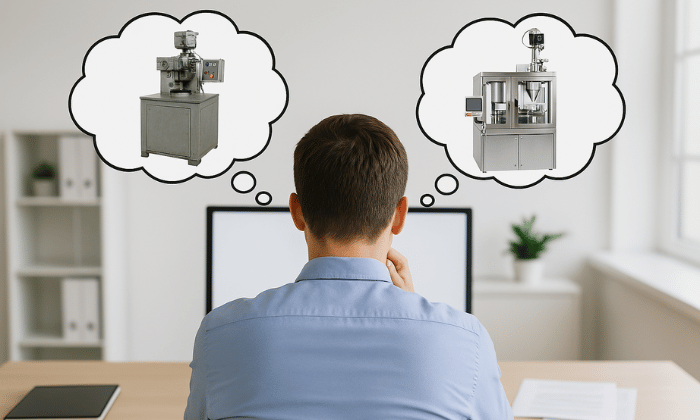
Help Choosing the Best Automatic Capsule Filling Machine?
High-speed machines are the game changers in today’s fast-paced nutraceutical and pharmaceutical industries. Imagine turning your product line into a powerhouse of efficiency and quality where every capsule is filled precisely and consistently. We will show you how to choose the best automatic capsule filling machine so you can elevate your operation and remain competitive in the global market.
In this comprehensive article, you’ll learn how these modern innovations help you comply with industry regulations and get actionable tips to optimize your production process.

Machine Type Comparison: Fully Automatic vs. Semi-Automatic Capsule Filling Machines

Choosing the right capsule filling machine starts with understanding the differences in performance and automation:
Fully Automatic Capsule Filling Machines
Fully automatic capsule filling machines are for high-volume production; typically, throughput is around 60,000 to 100,000 capsules per hour. They do capsule feeding, dosing, and sealing for you, minimizing manual intervention and giving high throughput, precision, and consistency.
These machines are for large operations that require high speed and strict compliance. The integrated automation increases efficiency and reduces the risk of human error.
Semi-Automatic Capsule Filling Machines
Semi-automatic machines fill 10,000 to 20,000 capsules per hour and offer balanced automation. They automate some processes but have operator oversight, so you can intervene when needed.
This balance is perfect for businesses transitioning from manual to moderate production. You get flexibility and more efficiency than fully manual methods.
Automation in Capsule Filling

Automating production has many benefits for production. Automatic capsule fillers increase output and consistency across every batch.
More Output
Thousands of capsules per hour, so you can scale up to meet high demand without compromising quality.
Better Dosing
Advanced automation means precise dosing and consistent filling, with less chance of errors. The exact amount of active ingredients in every capsule ensures better product quality.
Cost Savings and Labor Reduction
Automating capsule feeding, dosing, and sealing, reduces labor costs. Less manual intervention means allows staff to focus on other areas of responsibility.
Compliance
Automated systems streamline quality control and adhere to industry standards, making compliance easier. They also simplify the audit process and give you peace of mind about product safety and quality.
Choose the Right Capsule Filling Machine

If you need to fill capsules efficiently and accurately, choose the right capsule filling machine. However, with so many options available, it can be hard to decide, so consider these key points.
Production Volume
Calculate your required output based on daily, weekly, or monthly. Whether you need to fill thousands of capsules an hour or smaller batches, knowing your production requirements will guide you to the right machine.
Capsule Type and Size
Capsules come in different types and sizes, so choosing a machine that can handle your intended capsule type is critical. Hard gelatin capsules are standard, but many modern machines can handle HPMC and Pullulan gum. Some specialty machines, like the Index K120i Capsule Filler, can handle multiple sizes and have upgradeable, interchangeable plates, so you can adapt to changing production needs.
Machine Batch Capacity and Hole Count
The machine’s batch capacity or hole count determines how many capsules can be filled in one batch and impacts production efficiency. For example, a manual machine with 100 holes can fill 400 capsules in 40-60 minutes, while an automatic machine with 400 holes can do the same in 15-20 minutes. Even machines with a batch capacity of one can be efficient when optimized for specific tasks.
Automation Level
Machines range from manual to fully automatic, and the level of automation has a big impact on labor costs and efficiency. Manual and semi-automatic machines require more operator intervention, so they are better for smaller production runs, while fully automatic machines are for high volume with minimal human input.
Power Consumption
Check the machine’s power rating to see if it fits your budget and power supply. Energy-efficient machines can save you operational costs in the long run.
Maintenance and Serviceability
Ease of maintenance and availability of spare parts is a critical factor to consider. Machines designed for quick maintenance with strong support services will minimize downtime and ensure continuous production.
Considering these points, you can choose the right capsule filling machine for your production needs and operation. By doing so, you will integrate the right technology into your production line and set yourself up for long-term success.
Benefits of Automatic Capsule Filling Machines for Nutraceutical and Pharmaceutical Businesses

Automatic capsule filling machines far outweigh manual or semi-automatic systems and are essential for today’s solid dose production. They increase efficiency and ensure quality and compliance.
Faster and Higher Throughput
These machines can process thousands of capsules an hour. The high throughput means you can meet demand without sacrificing quality, and production can scale and be efficient.
Consistent Dosing and Product Quality
Automation delivers precise dosing and capsule filling. Consistency in dosing means no variability between batches, and every capsule meets quality standards and regulatory requirements.
Reduced Labor Costs
These machines reduce manual labor by automating capsule feeding, dosing, and sealing tasks. Less labor means lower costs and more manpower to focus on other production areas.
Simplified Quality Control and Compliance
Automatic systems have quality control measures like real-time monitoring and data logging. These features make it easy to comply with GMP guidelines and other industry regulations, simplify product audits, and make them safer.
Increased Operational Efficiency
High speed and precision dosing reduce labor, increasing operational efficiency. This lowers costs, produces less waste, and a competitive edge over the competition.
Adding automatic capsule filling machines to your production line can increase productivity, quality, and cost savings—the keys to long-term success in the nutraceutical and pharmaceutical industry.
Industry Compliance and Quality Standards

Industry compliance and quality control are crucial for the safety and efficacy of nutraceuticals and pharmaceuticals. Modern capsule filling machines are designed to meet these requirements, ensuring quality and peace of mind.
Global Benchmarks
These machines are built to global standards and GMP guidelines. Their smooth, easy-to-clean surfaces and automated dosing systems minimize contamination risks and ensure that every capsule meets quality control.
Real-Time Monitoring and Data Logging
Integrated systems provide real-time monitoring and data logging, which is essential for quality. This continuous oversight makes auditing and compliance with regulations much easier, and you can show compliance during inspections.
Documentation and Traceability
With detailed batch documentation and traceability, these systems help manufacturers meet local and international market demands. The data generated is reliable and enables quick corrective actions if issues arise, ensuring compliance and overall quality.
With all these features, automatic capsule filling machines increase production efficiency, and every product meets industry standards and quality benchmarks.
Global Market and Various Industries

Automatic capsule filling machines are key to production efficiency and profoundly impact global markets and industries. They help manufacturers confidently enter new markets.
Global Reach
These machines help manufacturers meet the high demands of international markets by producing high volumes of consistent quality. Scaling up without compromising quality is key to staying ahead of the competition and going global.
Various Industry Applications
Automatic capsule filling technology is widely used in the nutraceutical, pharmaceutical, cosmetic, and chemical industries. For nutraceuticals manufacturers, it enables consistent production of health supplements with accurate dosages and quality control. Pharmaceutical producers benefit from precise dosing and strict regulatory compliance. Cosmetic brands use it to produce beauty supplements and skincare products with high consistency and customer satisfaction. Chemical formulators must handle chemicals safely while meeting stringent safety standards.
Adapting to Market Changes
The scalability of automatic capsule filling machines allows businesses to adapt quickly to market changes. Their versatility enables companies to adjust production volume and product offerings as consumer demands evolve. This flexibility is crucial for long-term growth in a global market.
By using an advanced capsule filling technology, manufacturers can increase operational efficiency and become more competitive globally. These machines are necessary for businesses looking to go global and produce high-quality products.
Customization, Scale, and Integration

Good capsule filling requires flexible machines that integrate seamlessly into your production process. Here’s what you need to achieve maximum flexibility and efficiency on your production line.
Production Scale
Filling machines are designed to work on different production scales.
For small volumes, cost-effectiveness and flexibility are perfect for startups and low-volume production.
For medium volume, systems balance throughput and flexibility and support growing production without overwhelming the operator.
For large volumes, high-speed, high-capacity machines are built to run with minimal downtime and perform under heavy demand.
Customization
Customization is key to choosing the right capsule filling machine.
Many machines have quick changeovers; you can switch between capsule sizes and formulations with minimal effort.
Machines with user-friendly interfaces and adjustable settings make it more versatile. Operators can fine-tune processes to specific production needs, allowing the machine to adapt to market trends and business needs.
Integration
Seamless integration with other production line components is key to efficiency.
Modern capsule filling machines are designed to connect with mixers, conveyors, and packaging systems for a smooth workflow. They also integrate real-time monitoring and data management systems for traceability and regulatory compliance, making your production transparent and controllable.
Focusing on production scale, customization, and integration allows you to tailor your capsule filling system to your operation. This approach will ensure efficiency and the ability to adapt to market changes, which is essential for long-term success.
Technical & Operational Considerations

Capsule filling is all about technical design and operational know-how. This section covers the important bits that make it perform and work smoothly.
Operational Efficiency & Energy Management
Machines with energy-saving features and quiet operation cost less to run, making the work environment more comfortable. Energy efficiency also reduces utility bills and is better for the planet.
Tough Construction & Durability
High-quality materials and precise engineering ensure these machines can withstand continuous use and performance. Their robust construction also means less wear and tear, fewer repairs, and a longer equipment life.
Maintenance Strategies & Cost-Effectiveness
Good maintenance is key to high production. Machines with easy component access and modular upgrades minimize downtime and long-term costs and ensure production doesn’t stop.
Safety Features & Operator Protection
Safety is paramount in any factory. Emergency stops, interlocks, and ergonomic design protect the operator and meet industry standards, making the workspace safer and reducing accidents.
Support, Spare Parts, and Service Reliability

Choosing the right supplier for support, spare parts, and service reliability is key to your production line running without interruptions.
Partner with Experts to Overcome Challenges and Uptime
Look for companies with solid encapsulation expertise and a track record for reliability. Established manufacturers offer high-performance automatic capsule filling machines and good customer service that can sort out issues fast, with minimum downtime.
Technical Support is Key
Technical support is vital in today’s manufacturing world. Manufacturers that provide on-site training, proactive troubleshooting, and preventative maintenance checks will keep your machines in top condition, reducing costly downtime and extending the life of your equipment.
Spare Parts for Minimal Downtime
Access to a complete inventory of spare parts is crucial for continuous production. Immediate availability of critical components will quickly resolve mechanical issues, reducing downtime and keeping production schedules on track.
Service Reliability and Customer Satisfaction
Consistently good service is key to long-term production efficiency. Suppliers that integrate issue resolution, maintenance, and customer feedback into their service protocols build trust and deliver a better customer experience, which benefits the overall business.
Choosing the Right Manufacturer for Your Capsule Filling
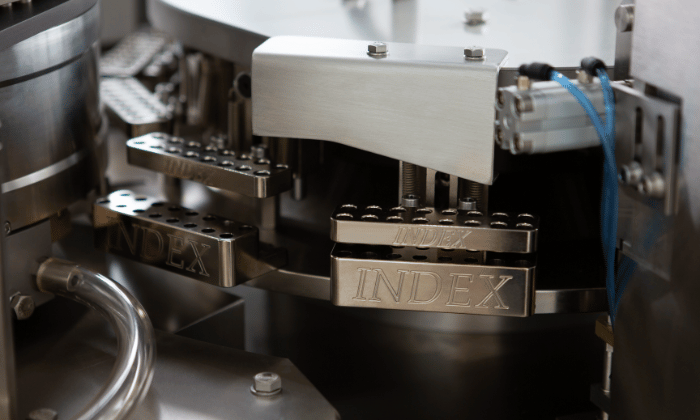
Choosing the right manufacturer for your capsule filling is key to getting a high-quality machine that meets your needs. This section provides practical tips to help you find a reliable supplier to support your production.
Research and Reputation
Research the manufacturer’s reputation, experience, and track record. Established manufacturers with a history of excellence are more likely to produce reliable, high-performance machines, so you can be confident in your investment.
Product Range and Versatility
Make sure the manufacturer has a range of machines to cover different production needs. A broad product portfolio that includes different capsule types, sizes, and levels of automation is a good indicator of the manufacturer’s ability to meet different market requirements.
Customer Support and After-Sales Service
Customer support is a major factor in choosing a manufacturer. Look for companies that offer technical support, maintenance service, and readily available spare parts. This commitment to service means minimal downtime and peak performance.
Certifications and Compliance
The manufacturer must comply with certifications and standards such as cGMP and ISO 9001. Meeting these standards means the machines are built to meet strict quality and safety requirements, giving you extra assurance for your production line.
Conclusion: What is Excellence in Automatic Capsule Filling Technology

Choosing the right automatic capsule-filling machine is more than just about speed. It’s about combining technology to achieve precise dosing, efficiency, and compliance. This conclusion summarizes the importance of quality, consistency, and innovation in modern solid dose manufacturing.
Key Features and Performance Metrics
Automatic capsule filling machines are designed for precision and reliability. They deliver accurate dosing through advanced mechanics and reduce operational costs with energy-efficient designs and high production volumes through continuous operation. These features set the standard for quality and consistency, making them a must-have for large-scale solid dose production.
Final Thoughts on Innovation in Capsule Filling Equipment
Better capsule filling technology drives innovation in the industry by increasing production efficiency and product quality. Investing in advanced automated systems improves processes and helps companies stay ahead in a rapidly changing market. This is key to reducing waste, optimizing operations, and staying in the lead.
Future Trends and Evolving Technologies
The future of capsule filling technology is going to be big. Emerging trends include AI for predictive maintenance, real-time monitoring, and energy efficiency. As manufacturers develop machines that can handle multiple formulations, these trends will drive operational excellence and product quality.
Frequent Asked Questions
How to fill capsules?
The best way to fill capsules depends on your volume and formulation requirements. A fully automatic capsule filling machine is the best for high-volume operations. Semi-automatic or manual systems might be more cost-effective and easier to manage for small batches or specialized formulations. Evaluate volume, formulation type, and budget to determine the best approach for your business.
What is the difference between manual, semi-automatic, and automatic capsule filling machines?
Manual capsule filling machines are the most affordable option but require significant time and labor, which increases operational costs. As production demands rise, semi-automatic machines can produce between 10,000 and 20,000 capsules per hour, although they still require operator input. In contrast, fully automatic systems can generate between 12,000 and 450,000 capsules per hour with minimal human intervention, making them the modern standard for high-volume production.
When should I invest in a fully automatic capsule filling machine?
Transitioning to automatic is best when production volume exceeds what manual or semi-automatic machines can handle. This is especially important when accuracy, speed, and compliance with industry standards become top priorities for your operation.
How do automatic capsule filling machines improve dosing accuracy and overall efficiency?
Automatic machines use dosing discs and tamping pins to fill each capsule uniformly. This precision guarantees accurate dosing, increases throughput, reduces labor costs, and improves production efficiency.
Are automatic capsule filling machines compliant with industry regulations and quality standards?
Yes. Many modern capsule filling machines are designed to meet or exceed industry regulations, including GMP guidelines. Their design and operating protocol are aligned with global quality standards to ensure product safety and consistency.
How do I choose the right capsule filling machine for my production volume?
Start by assessing your current production needs. A manual or semi-automatic machine might be enough for small-scale production. But if you are scaling up, look for automatic machines that can produce high throughput, be customized for different capsule sizes, and seamlessly integrate with your existing production process.
What customization options are available with modern capsule filling machines?
Modern machines can handle different capsule sizes (hard gelatin capsules) and filling materials (powders, liquids, etc.). Many machines have a user-friendly interface and quick changeover capability, so you can adjust the production line to match different packaging and formulation requirements.
What to look for when evaluating capsule filling machines?
Production speed, dosing precision, energy efficiency, noise level, and overall durability are essential for continuous and reliable operation. Features like a robust safety system (emergency stops, interlocks, etc.) and ease of maintenance are also crucial.
What kind of support services do capsule filling machine manufacturers offer?
Top manufacturers provide technical support, including on-site training, spare parts availability, control system upgrades, and rebuilding services. These services are crucial for maintaining uptime and ensuring equipment runs at optimal performance in the long term.
Which machine fills liquid in capsules?
Machines for liquid filling are often liquid capsule fillers. Some fully automatic capsule filling machines can handle powders and liquids. However, when precision dosing of liquid formulation is critical, manufacturers usually offer dedicated liquid filling machines that guarantee accurate dosing and quality.
What is the difference between automatic and semi-automatic capsule filling machines?
While both aim to improve production efficiency, the main difference is the level of automation. Semi-automatic machines require manual intervention for tasks like capsule placement or material loading, which can limit the throughput. Fully automatic machines perform most steps—from capsule feeding to dosing and sealing—with minimal human input to achieve higher speed and consistency.
How much does a capsule injection machine cost?
Costs vary widely depending on production capacity, level of automation, and machine features. Entry-level or manual systems can cost a few thousand dollars, while high-performance fully automatic machines can cost several hundred thousand dollars. It is best to consult manufacturers or suppliers for pricing tailored to your production needs.